
Ontario Corn and Soybean Micronutrients Knowledge Hub
Welcome to the Ontario Corn and Soybean Micronutrients Knowledge Hub, a searchable collection of research and extension information relevant to micronutrient management for corn and soybean production in Ontario. Developed through a rigorous systematic mapping process, the Ontario Corn and Soybean Micronutrients Knowledge Hub holds 126 Ontario-relevant records published between 2010 and 2025, providing a curated collection of the latest scientific evidence most applicable to Ontario's corn and soybean sectors.
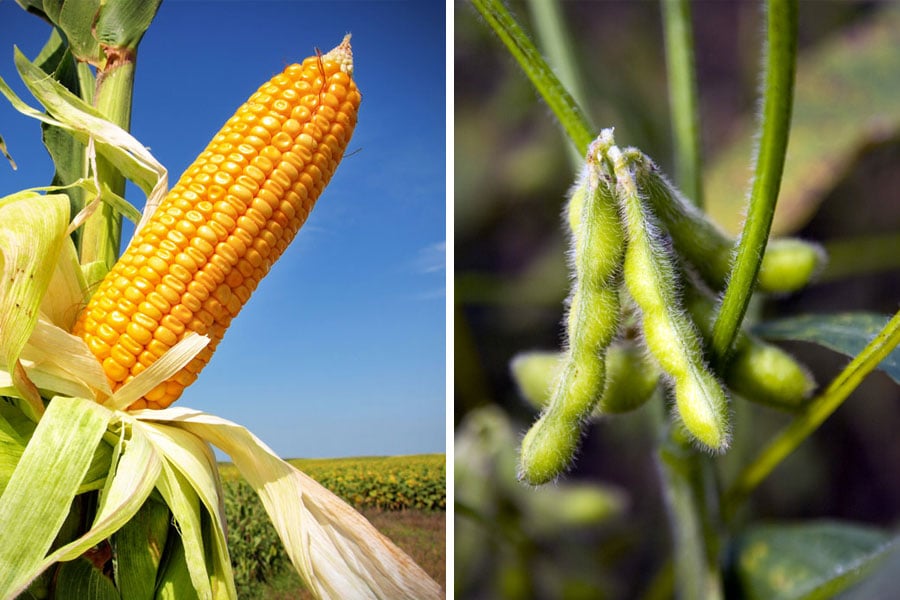
The Ontario Corn and Soybean Micronutrients Knowledge Hub includes a diverse range of sources, including peer-reviewed research articles, extension and advisory publications, handbooks, factsheets, and diagnostic and plant tissue testing resources, recognizing that important micronutrient management knowledge is generated through both scientific research and professional practice.
Only records determined to be relevant to Ontario production systems are included in the Ontario Corn and Soybean Micronutrients Knowledge Hub. Ontario relevance was assessed using predefined criteria based on continental glaciation history, similar climate and corn and soybean production systems.
The Ontario Corn and Soybean Micronutrients Knowledge Hub covers the nine micronutrients currently recognized as essential for corn and soybean production: boron, chlorine (chloride), cobalt, copper, iron, manganese, molybdenum, nickel, and zinc.
Each record included in the Ontario Corn and Soybean Micronutrients Knowledge Hub has been systematically coded using a standardized evidence extraction framework that captured study characteristics, geographic location, crop, micronutrient(s), intervention method, reported outcomes, document type, study type, and key findings. This standardized structure enables users to efficiently search, filter, and compare evidence across multiple dimensions while maintaining complete traceability to the original source documents.
The Ontario Corn and Soybean Micronutrients Knowledge Hub is intended to support researchers, agronomists, crop advisors, extension specialists, government agencies, commodity organizations, farmers, and policy makers seeking reliable, Ontario-relevant evidence. Users can rapidly locate information related to specific micronutrients, diagnostic approaches, critical soil and tissue testing considerations, micronutrient interactions, crop responses, application practices, and agronomic, economic, and environmental outcomes. By consolidating dispersed knowledge into a single searchable resource, the Ontario Corn and Soybean Micronutrients Knowledge Hub reduces the time required to identify relevant evidence while improving transparency and consistency in evidence-informed decision making.
Financial support provided by:

Collection

Soybean yield and quality in relation to soil properties
To optimize management, farmers require quantitative understanding of the factors affecting variability in soybean [Glycine max (L.) Merr.] seed yield and quality. Our objectives were to characterize spatial variation in soybean seed yield, oil concentration, and protein concentration in two south-central Minnesota fields over 6 yr of a corn [Zea mays L.]-soybean rotation, and to determine the influence of fertilizer treatments, soil chemical properties, and topography on soybean yield, oil, and protein. Soil and topographical variables were observed on 0.014-ha cells, and included Bray P1, Olsen P, K, Zn, pH, organic matter, total organic C, NH4-N, NO3-N, total N, mineralizable N, elevation, slope, curvature, flow accumulation, and aspect. Soybean yields consistently exhibited spatial structure. Within fields, spatial patterns of soybean yields were highly correlated across years, and we observed consistent relationships between yield and soil variables. Overall, soybean yield related positively to soil P and Zn and negatively to pH at all site-years. Models of soybean yield in relation to soil P and Zn indicate that in high pH soils at these sites, yield is optimized when soil P and Zn levels are higher than current extension recommendations. Protein and oil concentrations exhibited inconsistent spatial structure, and the spatial pattern of protein and oil concentrations differed across years. Relationships between soybean quality and soil properties were more consistent between sites within years than across years within sites, indicating that soybean quality is influenced by soil-climate interactions that function on a regional basis.
Soybean yield response to foliar-applied micronutrients and relationships among soil and tissue tests
Research is needed to assess the value of soil and tissue testing for micronutrients. This research evaluated the soybean [Glycine max (L.) Merr.] grain yield response to foliar application of B, Cu, Mn, and Zn and relationships between soil and plant-tissue tests at 42 sites in Iowa. Treatments sprayed at the V5-V6 and R2-R3 growth stages were a control, each nutrient applied separately, and their mixture. Soil-test results for moist or dried (40°C) samples (15-cm depth) for B were 0.23 to 1.66 mg kg-1 (hot-water test) whereas for Cu, Mn, and Zn were 1.6 to 4.2, 31.5 to 128, and 1.2 to 11 mg kg-1 by the Mehlich-3 (M3) test and 0.28 to 1.83, 3.8 to 42.3, and 0.48 to 15.1 mg kg-1 by the diethylenetriamine-pentaacetic acid (DTPA) test. Tissue B, Cu, Mn, and Zn concentrations were 24.3 to 41.5, 5.3 to 15.0, 29 to 113, and 24.5 to 47.8 mg kg-1 in plants and 27 to 62.3, 3.8 to 11, 26 to 88, and 17.8 to 47.3 mg kg-1 in leaves. Fertilization did not increase yield, sometimes increased leaf concentrations, but often increased grain concentrations. Except for Mn, M3 and DTPA tests were related for dried or moist samples (r2 0.31-0.95). Relationships between soil and tissue tests were not significant or poor (r20.31). With the exception of DTPA tests for Cu and Mn, published soil and tissue sufficiency ranges were too high for the conditions of this study.
Soybean yield response to rhizobia inoculant, gypsum, manganese fertilizer, insecticide, and fungicide
From 2000 to 2013, soybean [Glycine max (L.) Merr] grain commodity price increased by almost 300% generating interest in inputs to maximize yield. The objective of this study was to evaluate the effect of commonly sold inputs on soybean grain yield in enhanced (high-input) and traditional (low-input) production systems. Inputs evaluated included: Rhizobia inoculant, gypsum, Mn fertilizer, insecticide, and fungicide. A 16 site-year trial was established in Ohio during 2013 and 2014. Rhizobia inoculant was seed-applied before planting, gypsum was applied at the VC growth stage (unrolled unifoliate leaves), and foliar Mn, insecticide, and fungicide were applied at the R3 growth stage (initial pod development). There was very little yield response associated with the inoculant, gypsum, Mn, and insecticide due to fields being in a corn-soybean rotation, no S deficiencies, limited Mn deficiencies, and limited insect defoliation. The omission of fungicide from the enhanced production system reduced yield in 5 of 16 site-years by 0.21 to 0.79 Mg ha-1, but its addition to a traditional system increased yield significantly at 1 of 16 site-years by 0.47 Mg ha-1. Across the 16 site-years, soybean yield was influenced by fungicide application when fields had disease present, above average yield (3.5 Mg ha-1), and received 25 cm of precipitation in June and July. The data indicate a very small potential for high-input production systems to enhance crop yield without the presence of diseases, insects, or nutrient deficiencies.
Soybean response to broadcast application of boron, chlorine, manganese, and zinc
Efficient use of micronutrients can potentially increase soybean [Glycine max (L.) Merr.] grain yield and economic return. The objectives of this study were to determine the effect of broadcast application of micronutrients on soybean tissue nutrient concentration and grain yield and the relationships between soil and plant tissue tests. Three separate research trials were conducted at 35 sites from 2011 to 2014. Soybean response to Zn application was evaluated in Study 1; B, Mn, and Zn in Study 2; and B, Cl, Mn, and Zn in Study 3. Fertilizers were broadcast applied to the soil surface and incorporated prior to planting. Application of B, Cl, and Zn increased soybean trifoliate concentration of each respective nutrient but application of Mn did not. Addition of B, Cl, Mn, and Zn did not increase soybean grain yield and had a marginal impact on soybean grain quality. Application of 2.2 kg B ha-1 sometimes reduced soybean grain yield. Soil tests for B, Cl, and Zn did not predict soybean grain yield response and there were no relationships between trifoliate B, Cl, Mn, and Zn concentration to grain yield or their respective soil tests. Increased soybean grain yield did increase the removal of micronutrients, but it is unlikely that micronutrients are needed to increase soybean grain yield. Results from these studies conducted across Minnesota showed that broadcast application of B, Cl, Mn, and Zn do not increase soybean yield except for low Mn (20 mg kg-1) where Mn application could increase soybean yield.
Soybean response to seed inoculation or coating with Bradyrhizobium japonicum and foliar fertilization with molybdenum
Soybean is one of the most important legumes in the world, and its advantages and disadvantages are well known. As a result of symbiosis with the bacterium Bradyrhizobium japonicum, soybean can assimilate nitrogen from the air and is therefore not fertilized with this element, or if it is, only at small doses. In soybean agriculture practice, an important treatment is the inoculation of seeds with symbiotic bacteria and optimal fertilization with selected nutrients. Therefore, a three-year (2019-2021) field experiment was carried out to investigate the effects of soybean in the field to a seed Rhizobium inoculation or coating and molybdenum foliar fertilization. There were no significant interactions between the tested treatments over the years. It was demonstrated that the best variant was seed inoculation before sowing in combination with foliar molybdenum application. As a result of this treatment, a significant increase in nodulation, soil plant analysis development (SPAD) index, leaf area index (LAI) and seed yield (by 0.61 t.ha-1) was obtained compared to the control. In addition, the content of total protein in the seeds increased, while the content of crude fat decreased, which significantly modified the yield of both components. Sowing coated seeds in the Fix Fertig technology was less effective compared to inoculation, but it was significantly better than that in the control. Coating seeds with B. japonicum, in combination with foliar fertilization with molybdenum, could be recommended for agricultural practice, which was confirmed by economic calculations. Future experiments will assess the soybean's response to seed inoculation or coating and fertilization with other micronutrients.
Soybean seeding rate and fertilizer effects on growth, partitioning, and yield
Greater soybean (Glycine max L. Merr.) total dry matter (TDM) production may support yield potential and correspondingly drive greater nutrient uptake. Whether increased dry matter (DM) and reduced interplant competition at decreased seeding rates improves grain yield response to fertilizer applications is not clear. A 3-site-year trial was conducted to evaluate soybean seeding rates and fertilizer applications on plant growth, nutrient accumulation, grain yield, and economic return. Seeding rates included: 123,500; 222,400; 321,200; and 420,100 seeds ha(-1). Fertilizer applications consisted of: unfertilized; 90 kg MOP (0-0-62 N-P-K) ha(-1) pre-plant incorporated (PPI); 168 kg MESZ (12-40-0-10-1 N-P-K-S-Zn) ha(-1) applied 5 by 5 cm below and to the side of the seed at planting (5 x 5); and 90 kg MOP ha(-1) PPI and 168 kg MESZ ha(-1) applied 5 x 5. Dry matter (V4) increased 37.7 to 116.6% and 73.3 to 137.5% with seeding rates = 222,400 seeds ha(-1) and MESZ applications, respectively, with greater early-season DM supporting increased nutrient uptake and grain yield potential. Increasing seeding rate from 123,500 to 222,400 seeds ha(-1) improved grain yield 9% but no differences were observed above 222,400 seeds ha(-1). The MESZ and MOP+MESZ applications increased grain yield 7.4 and 6.9%, respectively, while MOP did not affect grain yield across site-years. As emphasis on creating more durable, resilient agroecosystems continues, results suggest seeding rates = 222,400 seeds ha(-1) maximized DM accumulation facilitating nutrient uptake which may be paramount to improving fertilizer management or reducing post-harvest residual soil nutrients in impaired watersheds or regions of greater nutrient loss potential.
Soybean fertilizer guidelines
This University of Minnesota Extension guideline on soybean fertility (reviewed 2026) addresses several micronutrients. Manure and multi-element fertilizers used in rotation supply micronutrients but the article's micronutrient-specific guidance covers boron (B), manganese (Mn), iron (Fe), and briefly zinc/copper/magnesium. Boron: soybean has low tolerance to B, with toxicity possible at broadcast rates as low as 2 lb B/acre; UMN research has not shown a yield benefit from B application, and excess B is more likely to reduce yield than help it, so B application is not recommended. Manganese: soybean has responded to Mn in other U.S. regions with historically Mn-deficient soils, but Minnesota research has not shown a widespread need; recent data suggest a possible response when soil pH >7.4 and DTPA soil Mn (0-6") is ?10 ppm, in which case 10 lb broadcast Mn/acre may be warranted; foliar Mn has not been tested and should only be tried on a trial basis. Other micronutrients: Minnesota trials show no yield response to magnesium, zinc, or copper application in soybean, so these are not recommended. Iron deficiency chlorosis (IDC) is highlighted as the main micronutrient-related production issue: occurs on fields with pH ?7.4 due to impaired Fe uptake (not true soil Fe shortage); best managed via tolerant variety selection (using UMN chlorosis-score trial data), minimizing plant stress (herbicide injury, salts, compaction, deep cultivation, seedling disease, carryover nitrate), in-furrow EDDHA-Fe chelate (ortho-ortho form) at 1-3 lb active ingredient/acre at planting, and/or an oat companion crop (1.5 bu/acre, killed at 10" height) to reduce IDC severity in badly affected areas. Growers in IDC-prone fields are advised to combine a tolerant variety with EDDHA-Fe and/or the oat companion crop.
Soybean iron deficiency chlorosis high-throughput phenotyping using an unmanned aircraft system
Background: Iron deficiency chlorosis (IDC) is an abiotic stress in soybean [Glycine max (L.) Merr.] that causes significant yield reductions. Symptoms of IDC include interveinal chlorosis and stunting of the plant. While there are management practices that can overcome these drastic yield losses, the preferred way to manage IDC is growing tolerant soybean varieties. To develop varieties tolerant to IDC, breeders may easily phenotype up to thousands of candidate soybean lines every year for severity of symptoms related to IDC, a task traditionally done with a 1?5 visual rating scale. The visual rating scale is subjective and, because it is time consuming and laborious, can typically only be accomplished once or twice during a growing season. Results: The goal of this study was to use an unmanned aircraft system (UAS) to improve field screening for tolerance to soybean IDC. During the summer of 2017, 3386 plots were visually scored for IDC stress on two different dates. In addition, images were captured with a DJI Inspire 1 platform equipped with a modified dual camera system which simultaneously captures digital red, green, blue images as well as red, green, near infrared (NIR) images. A pipeline was created for image capture, orthomosaic generation, processing, and analysis. Plant and soil classification was achieved using unsupervised classification resulting in 95% overall classification accuracy. Within the plant classified canopy, the green, yellow, and brown plant pixels were classified and used as features for random forest and neural network models. Overall, the random forest and neural network models achieved similar misclassification rates and classification accuracy, which ranged from 68 to 77% across rating dates. All 36 trials in the field were analyzed using a linear model for both visual score and UAS predicted values on both dates. In 32 of the 36 tests on date 1 and 33 of 36 trials on date 2, the LSD associated with UAS image-based IDC scores was lower than the LSD associated with visual scores, indicating the image-based scores provided more precise measurements of IDC severity. Conclusions: Overall, the UAS was able to capture differences in IDC stress and may be used for evaluations of candidate breeding lines in a soybean breeding program. This system was both more efficient and precise than traditional scoring methods.
Soil fertility recommendations for corn
This North Dakota State University Extension bulletin (SF722, revised Dec. 2022) covers corn soil fertility recommendations; among micronutrients, only zinc (Zn) is documented as a management concern for North Dakota corn, and no other micronutrient deficiencies (B, Mn, Fe, Cu) have been documented in the state for corn. Corn is one of four North Dakota crops shown to respond to zinc application when soil levels are low. The critical soil-test threshold using the DTPA extraction method is 1 ppm Zn. To avoid deficiency, the bulletin recommends either a broadcast application of at least 30 lb/acre of 36% zinc sulfate granules, or adding a compatible zinc chelate/ammoniated zinc product to starter fertilizer at planting. Broadcast zinc sulfate raises soil-test Zn for more than 10 years, whereas the starter chelate approach must be repeated annually whenever the field is planted to corn. Zinc can also be supplied along with N, P, K, and S through a 2x2 starter band at planting with no reduction in stand. Deficiency symptoms are described as yellow-striped/broad-striped newer leaves and stunted growth; correction via zinc chelate is possible after symptoms appear, but some yield loss will have already occurred by the time deficiency is visually detected, so preventive soil-test-based application is preferred over reactive treatment. The bulletin does not provide separate micronutrient guidance for soybean; its scope is limited to corn fertility. No soybean-specific rates, thresholds, or micronutrient deficiency issues are discussed in this publication.
Influence of manganese on efficacy of glyphosate in glyphosate-resistant soybean
Soltani, N., Shropshire, C. and Sikkema, P. H. 2011. SHORT COMMUNICATION: Influence of manganese on efficacy of glyphosate in glyphosate-resistant soybean. Can. J. Plant Sci. 91: 1061-1064. Four field trials were conducted from 2007 to 2010 in Ontario to evaluate the effect of various manganese (Mn) formulations (Mill, Ecoman 5% Mn; Mn2, MangaMax 5.5% Mn; Mn3, Man Max 5.5% Mn; Mn4, Superman 500 Mn; Mn5, Stoller This 5% Mn; Mn6, Nortrace 6% Mn-EDTA (ethylenediaminetetraacetate); Mn7, Nortrace 22% Mn and Mn8, WolfTrax 33% Mn) applied at 2.0 kg actual Mn ha(-1) on glyphosate efficacy at 900 g a.e. ha(-1) in glyphosate-resistant soybean. The tank mix of glyphosate plus Mn4, Mn6 or Mn8 caused as much as 6, 17 and 4% injury in soybean, respectively. There was minimal crop injury (0-1.4%) with other Mn tank mixes. The addition of Mn4 or Mn6 to glyphosate did not antagonize glyphosate efficacy on the weeds evaluated (AMARE, AMBEL, CHEAL and SETVI). The other Mn formulations antagonized glyphosate efficacy for the control of AMARE, AM BEL, CHEAL or SETVI under some environments. The addition of Mn3 or Mn6 to glyphosate reduced soybean yield as much as 15 and 10% compared with glyphosate alone, respectively. Based on these results, it is recommended that glyphosate and manganese applications be applied sequentially to avoid weed control antagonism and maximize soybean yield.


