Resource

Knowledgebase

Accessible knowledgebase for micronutrient management in corn and soybean production.
Micronutrient Management

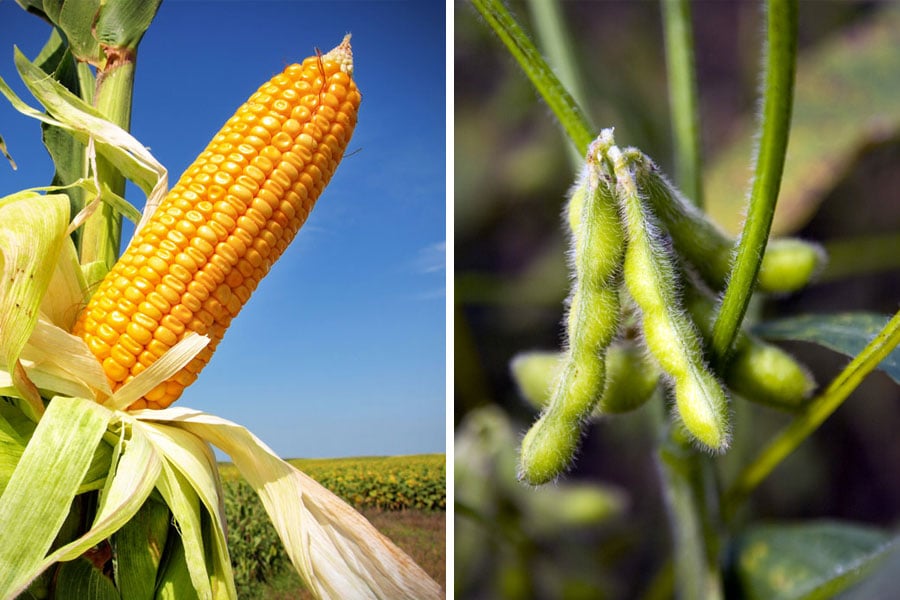
Getting micronutrients right can make the difference between an average crop and a great one. Corn and soybean yields often suffer when key micronutrients like zinc, boron, or copper are overlooked. But adding too much — or applying them at the wrong time — can waste money and even cause problems for your soil and plants.

This knowledge base is here to help you make sense of the research, understand when and where micronutrient issues are likely to show up, and choose the best strategies for your fields. You’ll find practical tools, up-to-date summaries, and proven best practices you can adapt to your farm.

Collection

Filters

Clear All
Showing 0 results of 0 items
highlight
Resource Type
Clear
Crop
Clear

Micronutrient

Clear
Select an option
Link Template

Research Article

Prescient Diagnostic Analysis for Boron Nutritional Status in Soy Crops
Traspadini et al.

2023

This study evaluated the accuracy of diagnostic methods for assessing boron (B) nutritional status in soybean crops. Using 140 field samples and controlled B calibration experiments, the research compared the Diagnosis and Recommendation Integrated System (DRIS), Compositional Nutrient Diagnosis (CND), and Prescient Diagnostic Analysis (PDA) methods. DRIS was found more effective, improving yield prediction by 27% over CND. The study recommends adopting improved DRIS criteria for accurate B diagnosis to enhance fertilization efficiency and sustainability in soybean production.
Soybeans

Review

Role of Micronutrients in Crop Production
Rahman et al.

2020

Micronutrients are present in soils in small quantities but play a critical role in plant growth and development. Essential micronutrients such as B, Cu, Fe, Mn, Zn, Mo, and Ni function as catalysts in enzymatic processes, participating in photosynthesis, respiration, reproductive growth, carbohydrate synthesis, and nutrient regulation. Deficiencies in these elements can cause stunted growth, chlorosis, and reduced yield and quality across many crops. Recent agricultural intensification, soil erosion, and reduced organic matter have increased the prevalence of micronutrient deficiencies, particularly zinc, iron, and boron. The review summarizes the physiological roles, deficiency symptoms, and management strategies for key micronutrients, including foliar and soil application methods, and the use of chelates and banded fertilizers for improved efficiency. The paper emphasizes integrating micronutrient management into sustainable agricultural practices to enhance productivity and food quality.
General crops

Research Article

Nutrient Sufficiency Ranges for Corn at the Early Growth Stage Implications for Nutrient Management
Amissah et al.

2023

This study validated nutrient sufficiency ranges (NSRs) for corn (Zea mays) at early growth stages as reported in the Southern Cooperative Series Bulletin #394. Field experiments from 2020–2022 tested the adequacy of existing NSR thresholds under varying nutrient regimes. Results indicated that nearly half of samples meeting all NSRs did not achieve expected biomass levels, suggesting that current NSRs may not be reliable for early growth diagnosis. The findings highlight the need to refine and validate NSRs for more accurate nutrient management in corn production.
Corn

Review

Nutrient Management for Soybean Crops
Bagale

2021

Soybean is a globally important crop requiring fifteen essential nutrients—six macronutrients and nine micronutrients. Effective nutrient management ensures balanced supply, reducing biotic and abiotic stresses. This review discusses roles, functions, and deficiency symptoms of each nutrient, emphasizing nitrogen, phosphorus, iron, boron, and sulfur as key yield determinants. The paper highlights the interaction between nutrients, uptake efficiency, and soil chemistry, recommending balanced fertilization strategies to enhance soybean productivity and quality sustainably.
Soybeans

Conference Paper

Micronutrients Fertilization for Corn and Soybean: A Research Update
Mallarino et al.

2015

This research update summarized micronutrient fertilization trials for corn and soybean across the north-central U.S. Micronutrients studied included B, Cu, Fe, Mn, Mo, and Zn. Deficiencies were uncommon but occurred mainly in sandy, high-pH, calcareous soils. Field studies in Indiana, Iowa, Kansas, Minnesota, and Wisconsin showed limited yield response to Mn, Zn, and other micronutrients except under deficiency conditions. Foliar Mn application improved soybean yield in a few cases, but overall responses were inconsistent. The report stresses that routine micronutrient applications are generally unnecessary without confirmed deficiency.
Corn
Soybeans

Review

Managing Micronutrients for Improving Soil Fertility, Health, and Soybean Yield
Thapa et al.

2021

Micronutrients such as Fe, B, Mn, Zn, Cu, Mo, Cl, and Ni are essential for plant functions and soil fertility. This review synthesized findings on soybean responses to micronutrient application across the U.S. Midwest. While yield responses were generally positive, results varied depending on soil type, organic matter, moisture, and temperature. Both soil and foliar applications were reviewed. Deficiencies have become more common with the adoption of high-yield cultivars and extensive macronutrient use. The study emphasizes the importance of improving micronutrient management strategies and promoting soil organic matter to sustain fertility and yield.
Soybeans

Book Chapter

Micronutrients and Crop Production: An Intro
Alloway

2008

Eight essential micronutrients—B, Cl, Cu, Fe, Mn, Mo, Ni, and Zn—are critical for healthy plant growth. Deficiencies in these trace elements can severely affect yield and quality, varying across crop species and regions. Zinc deficiency is the most widespread, followed by boron. Iron and copper deficiencies are regionally significant. The chapter outlines how agricultural intensification and soil management have increased micronutrient deficiencies and emphasizes the need to balance soil nutrient concentrations to avoid both deficiency and toxicity. The role of crop varieties in micronutrient efficiency and typical deficiency symptoms are discussed.
General crops

Research Article

Effect of Seed Priming and Foliar Application with Micronutrients on Quality of Forage Corn (Zea mays)

Sharifi et al.

2016

This study investigated the effects of seed priming and foliar spraying with micronutrients (zinc and iron, in both nano- and chemical forms) on the quality of forage corn (Zea mays L.) under field and greenhouse conditions over two years. Treatments included nano-iron chelate, nano-zinc, chemical iron chelate, chemical zinc fertilizer, distilled water, and control. Nano-iron increased leaf chlorophyll concentration, plant height, dry biomass, crude protein, and soluble carbohydrates. Both nano- and chemical zinc improved plant growth and quality, with superior results from nano-zinc. Nano-fertilizers enhanced phosphorus concentration, biomass, and nutrient efficiency compared to chemical fertilizers. Results suggest that nano-fertilizers can improve forage corn productivity and quality while reducing fertilizer use.
Corn

Research Article

Effect of Foliar Micronutrients (B, Mn, Fe, Zn) on Maize Grain Yield, Micronutrient Recovery, Uptake and Partitioning
Stewart et al.

2021

This study evaluated the effect of foliar-applied micronutrients (B, Mn, Fe, Zn, and Fe/Zn combinations) on maize grain yield, micronutrient recovery, uptake, and partitioning. Five experiments were conducted in Nebraska in 2014 and 2015. Treatments were applied at different growth stages and rates. Most foliar applications had no effect on grain yield, except for some Mn and Fe applications. A 19% yield increase was observed with Mn applied at the V18 stage, while Fe application increased yields by 13.5–14.6% across sites with visible Fe deficiency. Zn application occasionally reduced yield due to toxicity. Foliar-applied B, Mn, and Zn had limited translocation, though early B applications were mobile to reproductive tissues. Results highlight the importance of confirming micronutrient deficiencies before foliar application and targeting specific growth stages for optimal uptake.
Corn

Research Article

Critical Levels and Sufficiency Ranges for Leaf Nutrient Diagnosis by Two Methods in Soybean Grown in the Northeast of Brazil
de Souza et al.

2020

Establishing sufficiency ranges and critical levels of nutrients are important for a correct evaluation of plant nutrition through leaf diagnosis. This study aimed to propose critical levels and sufficiency ranges of macro and micronutrients based on leaf diagnosis of soybean plants. The database used was generated from 86 samples of soybean leaves collected during flowering in Piauí and Maranhão, Brazil. Results for macro and micronutrients and grain yield were used to calculate critical levels using reduced normal distribution and boundary line methods. Nutrient levels for 90% maximum grain yield were used to define critical levels, and sufficiency ranges for 95–99% yields. Critical levels for N, P, K, Ca, Mg, S, B, Cu, Fe, Mn, and Zn were determined. The boundary line method provided better distribution for diagnosing nutrient deficiencies, excesses, and adequate levels. The sufficiency ranges by the boundary line method yielded reliable leaf diagnostic thresholds for soybean nutrient evaluation.
Soybeans

Review

A Review on Soil Fertility and Soybean Yield Improvement by Managing Micronutrients
Tarar et al.

2022

The importance of micronutrients to plant growth is comparable to that of macronutrients such as nitrogen, phosphorus, and potassium, even though they are required at much lower concentrations. They are necessary for the process of cell division, the development of meristematic tissue, photosynthesis, respiration, the transfer of energy and nucleotides, and the overall growth of plants. Although plants only require very modest levels of micronutrients for optimal growth and productivity, the absence of these nutrients disrupts a wide variety of physiological and metabolic processes. It is necessary for plants to receive specific amounts of micronutrients in specific forms at specific times in order for them to grow and develop to their full potential. Lack of micronutrients in the soil significantly reduces soybean production. This article evaluates and summaries information on micronutrient utilization in soybeans at global level. We discussed micronutrient deficiency symptoms and their impact on soybean yields. Micronutrient application methods and dosages are also considered. This study compiled information on micronutrient use in soybean to better understand its impact on fertility, soil health, and grain yield.
Soybeans

Research Article

Foliar Micronutrient Application for High-yield Maize
Stewart et al.

2020

A three-year study (2013–2015) across Nebraska evaluated the impact of foliar-applied micronutrients on high-yield maize (Zea mays L.). Twenty-six on-farm strip trials assessed B, Mn, Fe, and Zn applications between V6 and V14 growth stages. Most soils and plants were above critical deficiency levels. Few significant grain yield increases were observed. Notable responses included a 0.4 Mg ha−1 increase from Fe application at Fe-deficient sites. Other micronutrient applications did not yield profitable benefits. The study concludes that foliar micronutrient application is beneficial primarily when visual deficiency symptoms are present.
Corn

Review

Cobalt: An Essential Micronutrient for Plant Growth
Hu et al.

2021

Cobalt is a transition metal located in the fourth row of the periodic table and is a neighbor of iron and nickel. It has been considered an essential element for prokaryotes, human beings, and other mammals, but its essentiality for plants remains obscure. In this article, we proposed that cobalt (Co) is a potentially essential micronutrient of plants. Co is essential for the growth of many lower plants, such as marine algal species including diatoms, chrysophytes, and dinoflagellates, as well as for higher plants in the family Fabaceae or Leguminosae. The essentiality to leguminous plants is attributed to its role in nitrogen (N) fixation by symbiotic microbes, primarily rhizobia. Co is an integral component of cobalamin or vitamin B12, which is required by several enzymes involved in N2 fixation. In addition to symbiosis, a group of N2 fixing bacteria known as diazotrophs is able to situate in plant tissue as endophytes or closely associated with roots of plants including economically important crops, such as barley, corn, rice, sugarcane, and wheat. Their action in N2 fixation provides crops with the macronutrient of N. Co is a component of several enzymes and proteins, participating in plant metabolism. Plants may exhibit Co deficiency if there is a severe limitation in Co supply. Conversely, Co is toxic to plants at higher concentrations. High levels of Co result in pale-colored leaves, discolored veins, and the loss of leaves and can also cause iron deficiency in plants. It is anticipated that with the advance of omics, Co as a constituent of enzymes and proteins and its specific role in plant metabolism will be exclusively revealed. The confirmation of Co as an essential micronutrient will enrich our understanding of plant mineral nutrition and improve our practice in crop production.
General crops
No results found.
Thank you! Your submission has been received!
Oops! Something went wrong while submitting the form.
Open Modal

Contact us

General Inquiries

For general inquiries, including partnership opportunities:
905 650 3857
info@vistast.com

Follow us

close modal